While writing an article about my Aunt Barbara for Clarke University Magazine, I had the great opportunity to reconnect with a few of her students and colleagues. When I emailed Professor Katherine Fischer, she emailed me back with a colorful description of my Aunt Barbara that was so good that I asked her to adapt the email into this essay, which you see her. Thank you, Katie!
By Professor Katherine Fischer
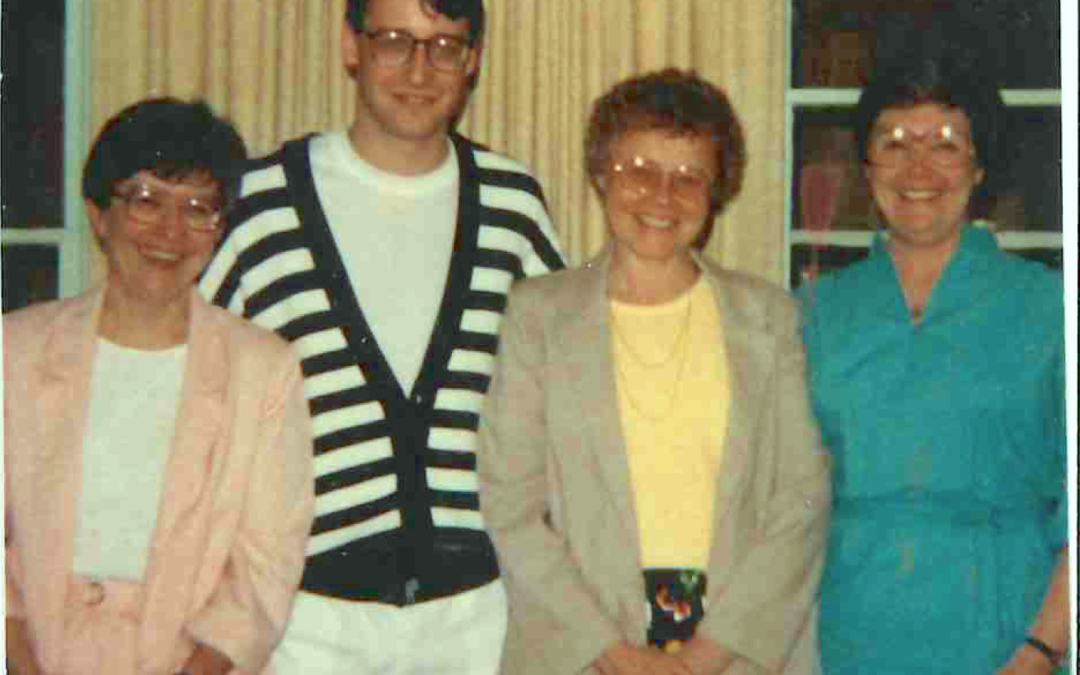
Sister Barbara Kutchera embodied liveliness, generous heart, and amazing spirit. I am the glad beneficiary of what I call the “triumvirate,” that is the threesome of Barbara, Sara, and Pat—all BVM sisters at Clarke College. I joined the Clarke English faculty in 1989 and walked alongside them until they left, first Barbara, then Sarah, and finally Pat. Eventually I was fortunate enough to carry their torch as Department Chair although never as capably nor as fully as they did. The photo above features the “triumvirate,” BVM Sisters Barbara Kutchera, Sara McAlpin, and Pat Nolan, with student Marty Roddy, at the English Dept graduation party in May of 1989.
I first met Barbara when I was an English/Secondary Ed major at Clarke between 1969-1973. I still remember crystal clearly the first day of her English major Introduction to Secondary Ed. class my junior year. She began class this way: “Each of you take a paper lunch bag from this box. Open it up, fold it over, breathe it in. . . Now write. Write about what you could do with it.”
I was astounded. She was totally off the wall I thought to myself. What to do with a brown paper bag? Egad, put a sandwich and an apple in it! But no, she wanted us to get beyond the obvious, to think afresh, to stir up our thinking. By the end of that first class, I fell in love—with her teaching, with being set free to think beyond the ordinary, and yes, with this fantastic woman. She was terrific in the classroom.
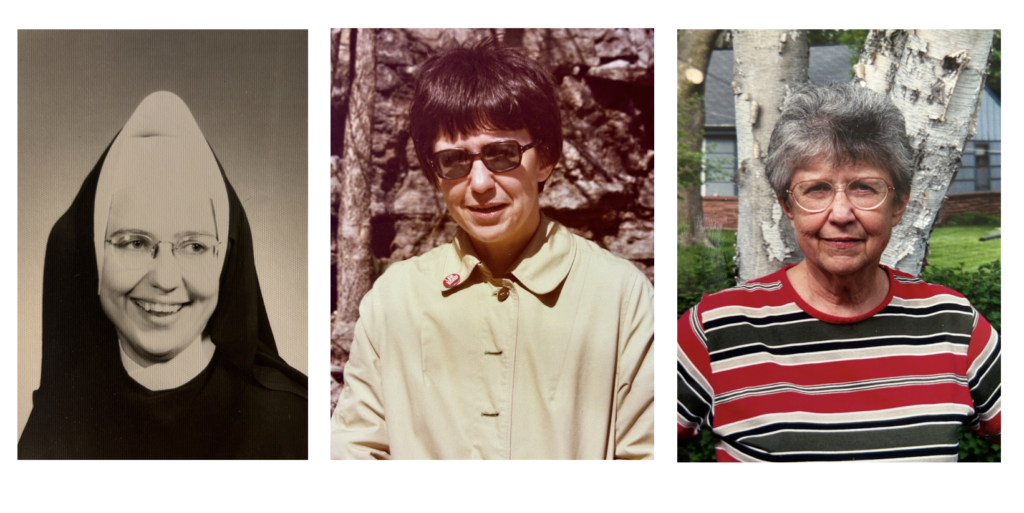
Sister Barbara Kutchera, BVM pictured in three phases of life
In addition to calling all of us middle class Midwestern mostly white American young women to become conscious of migrant workers and the call to boycott grapes, she also came through the dorms offering rides down to Washington Park for peace moratoriums against the Vietnam War. My dad had told me I could go to any college but Berkley or Madison, those hotbeds of protest and unrest. Little did he realize that right there at Clarke College I would run into rebels like Sister Barbara Kutchera and several other BVMs calling me to social justice and peacenikhood. My life has been changed ever since thanks to them.
Years later, I started teaching at Clarke and sat through weekly English Department meetings with Sara, Pat, and Barbara (who traded the role of Department Chair every few years). Those meetings went on forever. . . and ever! These smart good sisters were so wedded to collaboration that they had to turn over every leaf, inspect every bug in a decision, sift through the dirt, and examine the most minute details and eventualities. Often meetings ended with the decision not to make a decision. I thought I’d go nuts. But slowly, I became drenched in their wisdom, their allegiance to all points of view being considered, and to mulling things over rather than choosing the quicker route with hastily made decisions.
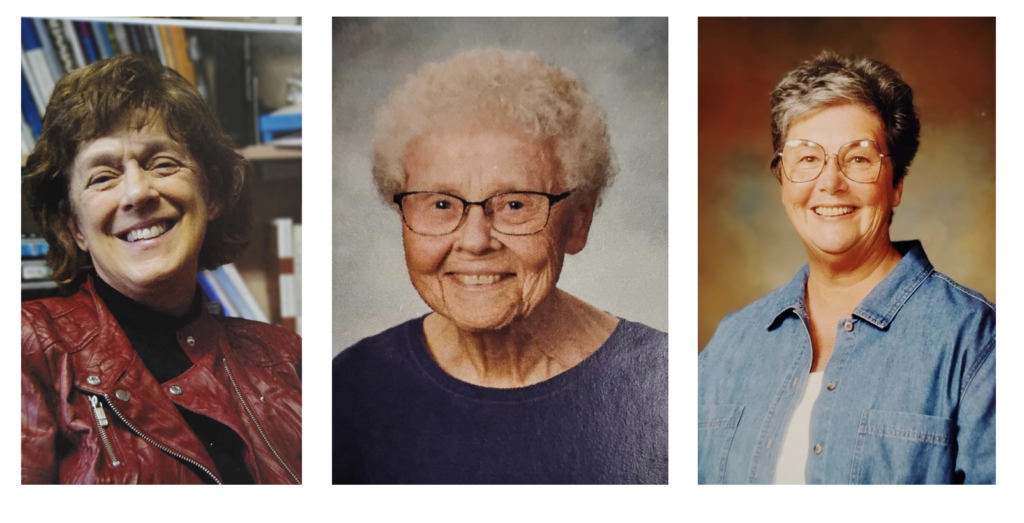
Clarke University English Professors Katie Fischer (left), Sara McAlpin (middle), and Pat Nolan (right)
The credit they gave me as a baby faculty member was remarkable. I’d taught high school for years but there were no Ph.D. initials behind my name in the earliest years. Nonetheless, they’d ask me to weigh in on decisions and listened thoughtfully when I did. I’m chuckling as I write this recalling how Barbara would gaze intently, fluff her fingers through hair on the top of her head, and then remark, “That has me thinking. . . What if…”
Barbara felt the call to go to Milwaukee to serve women in the prison system and thus left Clarke. Eventually, she volunteered at The Shade Tree, a center for African American women, where she taught creative writing, helping women coming out of jail, who had been to jail, or women undergoing rough times. I was teaching Creative Writing at Clarke. We decided to partner her students and mine together with similar writing topics, exchange papers, meet over a few meals in Dubuque, and then create a booklet of all their writing. It was both touching and hilarious.
My students that first time were all traditional-aged white students, many of them from Iowa farms or smaller towns like Mason City or Cascade. Her students were all past forty, city women who had experienced a great deal. She traveled with them from Milwaukee and we met in the Clarke Union. My normally chatty students went silent upon meeting Barbara’s students, most of whom were outspoken and. . .hmm, dare I say loud? Yes, loud and unavoidable. At first, we met in one large group but eventually broke into smaller groups which was a lot more conducive to conversation. I don’t recall where we went to dinner, probably the BVM cafeteria or the Clarke cafeteria. Her students were gentle with mine who remained wide-eyed and astounded. But over the course of two days, they grew more comfortable.
They continued to exchange writing (pre-internet, so it was all through USPS). Barbara reported that her students were surprised by mine as they were not in the company of college people nor ever on a college campus. By the end of the term, my students reported that the encounter with Shade Tree writers was the biggest part of our class. Barbara’s students learned that they mattered even in that college world they’d never been a part of. Together Barbara and I created a stapled-together 8×11 booklet of their writing. Basic but profound.
I also inherited Barbara’s office after she left Clarke—a realization that hit me every morning as I unlocked the door. I also ended up teaching at Immaculate Conception H.S. for a year in Mississippi, a BVM school, because of Barbara. I volunteer now at the Presentation Lantern Center teaching English to immigrants and serving as a cultural translator to that community, again because of those three BVM sisters and their call to otherness back when I was in college. I tell people all the time that I’d probably not be Catholic today were it not for the BVMs in my life.
I have been forever altered. I will be forever grateful.
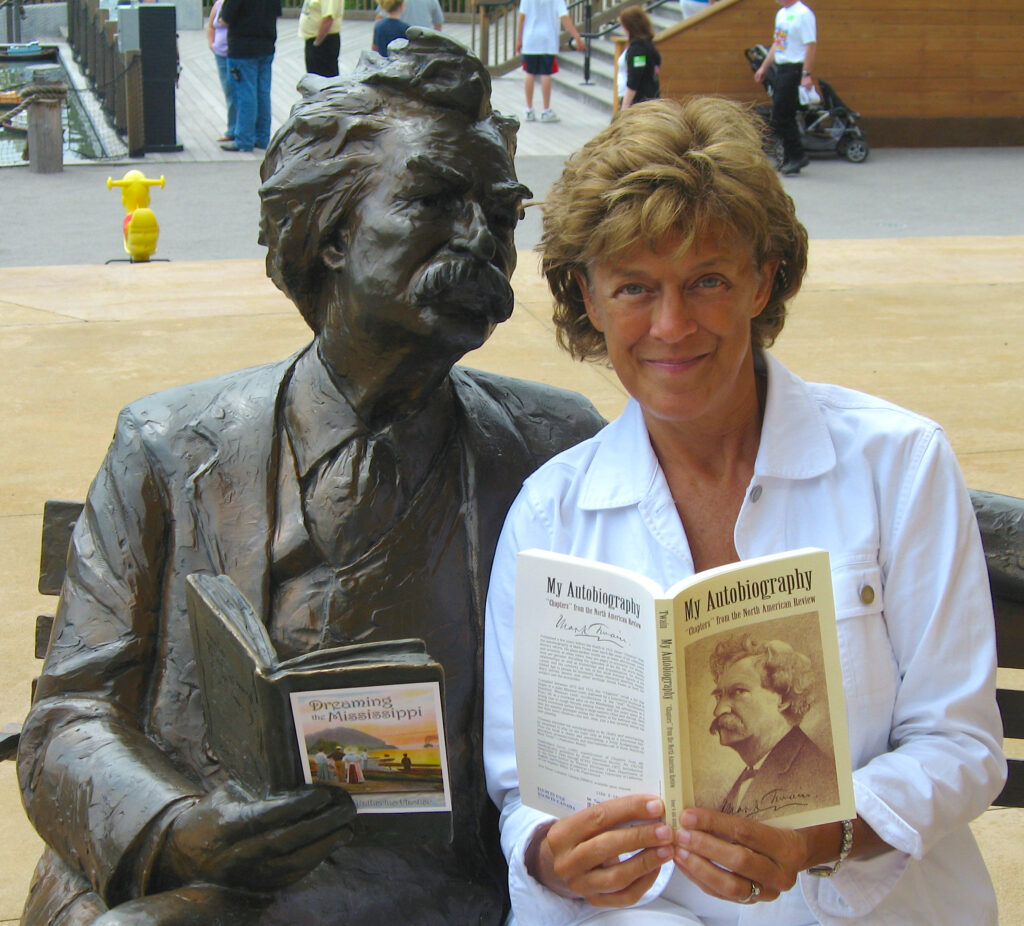
Katherine Fischer is Professor Emeritus of the English Department at Clarke University in Dubuque, Iowa. She writes regularly for the Dubuque Telegraph Herald and is the author of Dreaming the Mississippi and two other books.