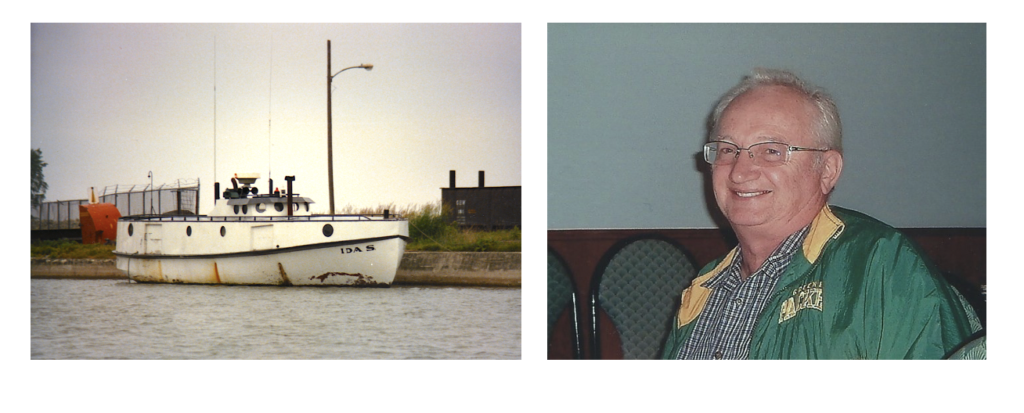
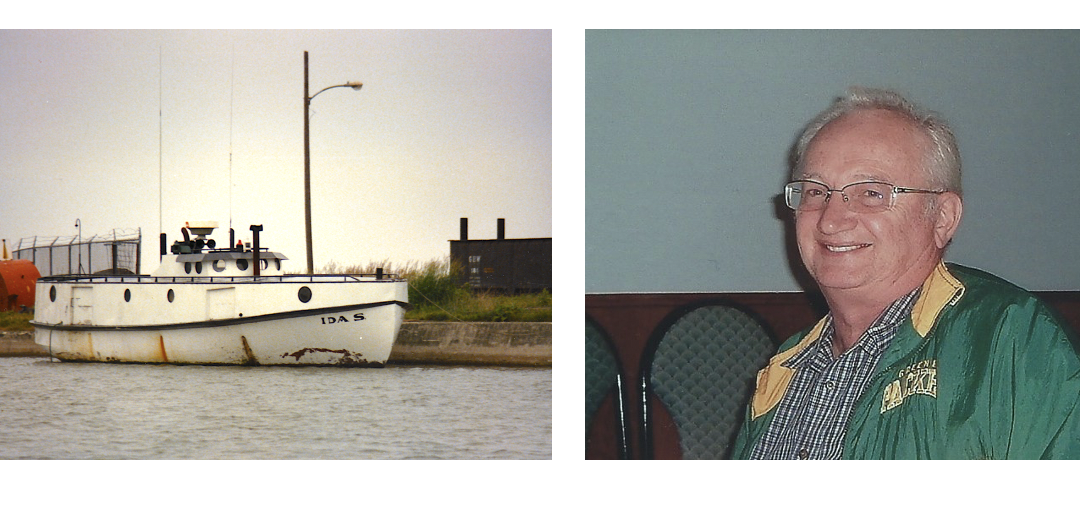
While writing my book Portraits of Immigrant Voices, I learned how much I enjoy interviewing people and boiling down their life stories into a page or two. I had the same opportunity when I worked on “From Lake to Plate: Local Fishing Families and Foodways,” a photography exhibit at the Wisconsin Maritime Museum, featuring my dad’s portraits of employees at Empire Fish Company. I wrote the following life story of fisherman Philly Anderson for the exhibit. He is pictured above along with his boat, the Ida S.
When you boil down someone’s life story into a single page, you discover their essence and the beauty in their spirit. I first discovered this approach while reading WORKING by Studs Terkel, which inspired me then and continues to do so.
Many thanks to Shelby Miller who collected oral histories of Lake Michigan’s fishermen and family-owned fish companies while studying at Alverno College, with guidance from history professor John Savagian. We excerpted the most colorful quotes from the recordings that Shelby collected for the exhibit at the Wisconsin Maritime Museum.
***
Phillip Anderson, who goes by the nickname Philly, grew up in a commercial fishing family. His father, both of his grandfathers, and one great-grandfather fished Lake Michigan and Lake Superior. After graduating from high school in Kenosha, he worked at American Motors (now part of Stellantis) and then served in the U.S. Army for two years during the Vietnam War. Upon returning home, he returned to work at American Motors but quit after two weeks, deciding to follow in his family’s footsteps to become a fisherman.
“I started fishing with my grandfather at age 13. I went on a boat, “Holland Michigan,” and got six dollars a day at the time. Anyway, I got that first boat and things went pretty well. Some I just flipped, others I had for quite a while. One boat, the Ida S., a 55-foot Burger Boat, I had that one for 35 years. I never regretted it. it’s been a good life. It had its ups and downs, but it was very satisfying. For the most part, I was successful at it. Every year was a little different.”
During the peak of his business, Philly owned three fishing boats, each with its own captain and crew. Chubs represented about 75% of the catch, while yellow perch represented the other 25%, of which Chicago fish wholesalers bought nearly everything. When the State of Wisconsin closed commercial perch fishing in the late 1990s, it directly impacted his business as perch yielded the highest price per pound.
“Commercial fishing…puts a strain on the family. Especially in my case, where I fished all over Lake Michigan and away from home a lot of the time. It puts a strain on your family life.”
Anderson eventually retired in 2012 at the age of 68 after fishing Lake Michigan for 45 years. Anderson adds, “I quit because I couldn’t make a living anymore,” after gas prices went up and fish catches declined significantly. “I wouldn’t have traded it for anything,” he says. “It had its up and downs, but it was pretty good. I put my kids through college. All and all, it was a very satisfying occupation.”